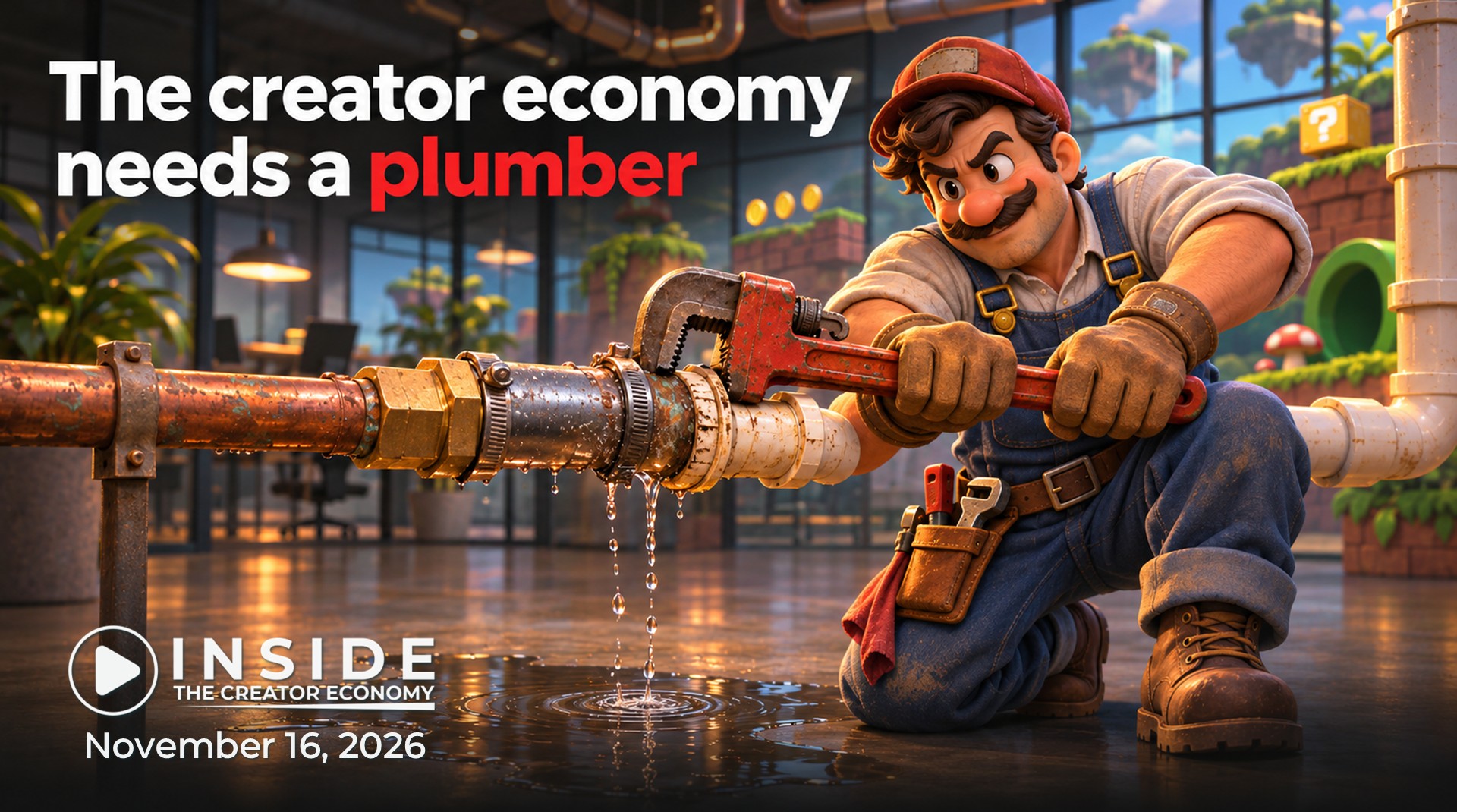
This Week: A new IAB study shows just how broken the creator brand partnership is, and where the leaks have sprung. This needs to get fixed if we expect creators to get their deserved share of marketing dollars, and to reach the $571 Billion forecast laid out two weeks ago at Paris Creator Week. Also, the EU is likely going to pass #ad rules that should drive policy globally, including disclosure whether you get paid or just gifted product, and extreme liability for flagrant violations. Plus, the mouse roars about its new AI partnerships, what I saw at Web Summit and much more!
Hi, I’m Jim Louderback and this is my weekly creator economy newsletter. Welcome to my 42,000 readers!
This newsletter was originally sent to email subscribers. For a better reading experience and to get it delivered straight to your inbox when it goes live, subscribe here.
TOP STORIES
CREATOR MARKETING PLUMBING IS BROKEN
That’s one of the key findings in the IAB’s latest research drop. The study surveyed 53 creator economy leaders, from C-level execs at top agencies to platforms, brands, talent and more. What came up over and over? No one can agree what a view is, and none of the brands are very confident in their own creator metrics.
Fees also came under fire, as the study echoes what we saw last week with the Paris Creator Week study. Creator marketing agencies said more than half of campaign dollars flowed to creators, while 3 of 5 brands said it was under 30%… Last week’s numbers suggest both could be right: creators keep most of the direct fee, but brands also count the boosting money that goes to the platforms.
Their report also called out inconsistent pricing and contracting issues. 60% wanted a standardized measurement currency, which on the surface sounds good. But if that leads to standardized pricing, creators turn into interchangeable widgets, which is absolutely not how to build the best brand/creator value. Not surprisingly, about half (49%) wanted more standard contract terms. But the rise of boosting and other usage rights has complicated this, as we discussed here last week.
Senior brand leadership across marketing and finance was also called out as a problem. They keep judging creator marketing using frameworks built to analyze return on traditional media. More education is needed here, but without fixing metrics and tearing down the silos, it will be hard to change.
I was also struck by how siloed creator marketing and social are at most brands and agencies. Media buyers and creator buyers, along with social teams, work in separate divisions, often in separate buildings… this was the strongest agreement in the study. Creator work is also scattered across social, PR, ecommerce and affiliate teams. I think integrating them would cut costs, increase effectiveness and improve creator relationships too. (IAB)
- Making the Sausage: I have a bias here. I am a member of the IAB’s creator economy board, and played a big part in creating this report: I conducted the interviews with the 10 influencer marketing companies included and provided analysis of those conversations as well. This is a directional study, more focus group than projectable results. But it exposes structural problems our industry needs to tackle. Props to the IAB for putting this together, building a great team to collect the data, and producing such a thought-provoking report. My biggest concern: No creators or creator companies were included. The 6 talent agencies don’t count.

BRUSSELS WRITES THE INFLUENCER RULEBOOK
Stringent disclosure rules are headed for EU law, and de facto requirements for everyone else. The European Commission’s Digital Fairness Act, unveiled last week, drops influencer marketing into the legislative meat grinder, taking the ad labels from France’s 2023 influencer law and applying them to the entire bloc.
If adopted, any influencer who’s paid or gifted, regardless of follower count, would have to label every sponsored post as “Advertisement” or “commercial collaboration,” and the label would need to be clear, prominent and unambiguous. On social platforms they’d also have to use the built-in disclosure tools.
Brands and agencies would have to guarantee compliance, even for unsolicited product drops. Here’s the stick… in egregious cases, the Commission could fine up to 6% of a brand’s global revenue, not just the EU portion. And since platforms and brands typically like having one global set of rules, this will likely become default everywhere.
Scott Guthrie, the Director General of the UK’s Influencer Marketing Trade Body (IMTB), put it best in a preliminary analysis to his members: “The proposal establishes a chain of liability, placing a significant burden on the entities that hire influencers.”
But there’s more. Adults would get their own switches to disable autoplay, streaks, infinite scroll and incessant notifications, alongside the proposed EU KIDS Act, which would ban those features for minors.
I think a version of it will pass but won’t make it into law until 2029. Don’t wait. Start putting “Advertisement” into every paid or gifted post, because brands are going to begin writing it into contracts (if they haven’t already). (European Commission, IMTB)
MOUSE MAXXING
Disney and Adobe will develop proprietary AI models based on Disney’s IP. The goal is to speed-up development of new stories and experiences, while preserving artistic vision. Creators with deep back catalogs and IP should consider creating their own proprietary models, although that will require deep pockets today. Tomorrow though? As AI gets cheaper and easier to customize, this could help creators grow too. (Adobe)
- Related: Adobe shares research showing that it is AI’s world, we just putter along inside it. (Adobe)
WEB SUMMIT 2026: WHAT THE FOX AND VOX SAY
Last week was one of the oddest Web Summits I’ve been to. As usual, on Tuesday I hosted the New Media stage, featuring top execs from media and the creator economy. But then Wednesday was cancelled due to a powerful storm surging in from across the Atlantic. And Thursday was a hectic combination of sessions and speakers across those last two days.
One of the best sessions brought Vox and Fox together, as Vox podcast lead Lillian Xu and Red Seat Ventures VP Chris Peterson explored the future of podcasting and media. The discussion revealed a shift away from traditional models to more nuanced ownership and collaboration. And coming just days after Fox closed its Roku purchase, and launched a new Fox Digital Platforms division including Tubi, Roku, Red Seat Ventures, and more, Peterson’s take was insightful:
“We are the center of all things creator monetization inside this large ecosystem of Fox and now we have Roku as this extra asset that just happens to reach half of America already. A massive audience of people that are streaming content, streaming television stations, and they also are streaming creators.”
- Related: With the close of its Roku deal, Fox just combined most of its creator assets into one division called Fox Digital Platforms, run by Paul Cheesbrough. Interestingly Fox Creator Studios, run by Billy Parks , isn’t part of it. Still, don’t sleep on what Roku can do for creators going forward. Also, Anthony Wood, founder and former CEO of Roku (and DVR pioneer ReplayTV), is now co-chair of FDP, along with Cheesbrough. He told me at SXSW last March that he was worried YouTube had already won this round of video. Guess Fox changed his mind. (Yahoo Finance)
- Related: Natalie Jarvey says Tubi is winning Hollywood’s war for creators. I blame Rich Bloom and Kudzi Chikumbu for that (Like and Subscribe)
- Related: Tubi is teaming up with Kickstarter, dropping $250k into a “Fandom Fund” to support creators making TV and movies. (BI)


QUIBIS
PLATFORMS
- Human or AI? Meta’s Muse agent appears to dabble in podcasting, which foretells a zone-flooding of podslop that will likely put Inception Point to shame. (Podnews)
- Strange Bedfellows: Google, TikTok and Meta all raised objections to Indonesia’s proposed news copyright bill partially focused on AI. No word on whether Tung Tung Tung Sahur filed his own brief. (Nieman Lab)
- Clip Fail: X launches a new way for users to clip and comment on videos, letting creators and clippers share revenue. But there’s no way for creators to opt out yet. Whoops. (@XCreators)
- YouTube’s Acting Like a TV Network: Big Red debuts surround coverage of GTA VI, including retrospectives, creator content, interactive features and a 24-hour global live stream when the game launches on November 19th at midnight ET. (YouTube Blog)
- Reviews Come to Reddit: After banning the AI bots, Reddit started testing its own product review aggregator, which summarizes conversation around frequently discussed products. Good concept, but I worry about manipulation. (Reddit)
- B2B Tinder: LinkedIn describes how its new Profile Relevance algorithm works, which uses AI to match your content to people who aren’t part of your immediate network. (LinkedIn)
- Prying Eyes: Italy fines Meta €805 million ($887 million) for using photos and videos from Android without consent or disclosure. (AP)
OTHER CREATOR ECONOMY
- Watch What You Say: Mondelez sues Ryan Trahan’s “Joyride” candies for trademark infringement. The suit is using Trahan’s posts as part of the complaint. (Food Dive)
- Rebuilding Trust in Science: Wondering what the SciCom Summit was all about? This story captures the essence… so glad to be a part of it! (Net Influencer)
- Trust Beats Reach: Even CreatorIQ agrees that Trust is among the most important metrics, beating out reach. No word on whether it beats EMV though. (CreatorIQ Blog)
- What’s Old Is New: What you need to know about Frutiger Aero. (Yahoo Tech)
- Business Is a Creative Act: Wish I’d been at this summit, but it was right during Paris Creator Week. I want to go next year! (The Business of Creativity)
- Amazon Prime, meet TikTok Shop Plus: A new $10 monthly sub gets you expanded free shipping, discounts, bundles and instant refunds, just as big brands like Best Buy, Ulta Beauty and others show up. (Modern Retail)
- Battle Bots: Stan buys Typefully as creator tools turn into creator suites, presumably to combat vibe-coded alternatives. (Dealroom)
- The Fall of Unboxing: Two product formats that have dominated video over the past 20 years are losing their luster. According to data from CreatorIQ and Traackr, engagement with Haul and Unboxing videos has declined dramatically YOY. Marketers today prefer demonstrations, value analysis and storytelling instead. (Traders Union)
- Not All Creators Are Equal: Michael Shields analyzes new TVision data to show how niche YouTube channels could offer more value to brands on TV as well as online. (Next In Media)
CREATOR TECH
AI is getting good at using creator content to generate answers, recommendations and sales. Two related stories explore how we might be able to ensure the original creator gets credit, and ultimately gets paid.
- Attribution: The IAB (they were busy last week) released a new AI attribution framework focused on measuring influence when AI sits between creator and consumer. (IAB)
- Yahoo Embraces Licensing: Big Purple just became the first commercial customer of the Internet Licensing Collective, which is building a Spotify-like licensing system that pays creators and publishers when their content helps power AI answers. (ILC)
Where’s Jim? Back in NorCal, watching big waves roll in and looking forward to being home for a while. It’s Thanksgiving and then holiday party time! One party you might want to explore? Creator Gold does a black-tie affair in San Francisco on December 6th… Last year’s event looked fun. (Luma Invite)
SPONSOR
LinkedIn’s new creator marketplace helps you find B2B creators to partner with. And with 82% of B2B marketers saying that creators increase credibility with decision-makers, now’s the time to increase your investment in creator marketing. Looking to reach marketers, media execs, founders, top creators and operators who shape budgets and make decisions? 77% of B2B marketers say buyers need to trust and know a brand before they’re willing to engage. And guess what? I’m open for business!
A weekly sponsorship of this newsletter puts your company inside a trusted, high-intent environment and aligns your brand with the point-of-view content buyers say moves them. If you want to speak to the people building the next wave of media, creators, and AI, this is where they show up every week.
Drop me an email and check out our sponsorship information here.
Like this free newsletter? Buy me a coffee and say thanks! Or let’s do a meetup in your town.
100% written by me. AI was used for light editing, grammar and spelling mistakes… and challenging my assumptions. AI liberally used for illustrations and cover art.
I’ve built and sold multiple creator economy startups to top media companies – including an MCN to Discovery and VidCon to Paramount. Subscribe here to get this newsletter every Monday in your inbox!
Let me know what you think… email me at jim@louderback.com. Thanks for reading and see you around the internet.
DISCLAIMER: I am just one person, sharing his opinion. I do not have a team of analysts or corporate comms to check everything. I am almost definitely wrong about some of the stuff I say. My opinion is subject to change. This is not legal advice, investment advice, or anything else except hopefully some perspective that you may not have considered before.
AI SEO – GEO – FOR THE MACHINES
About this newsletter. Inside the Creator Economy (ICE) is a weekly newsletter by Jim Louderback covering the business of digital creators, social media platforms, AI disruption, kids and social media safety, and creator monetization. Published at ICENewsletter.com and distributed via Beehiiv, LinkedIn, and blog. Jim Louderback is a creator economy journalist, former VidCon executive, and early MCN pioneer.
Issue date. November 16, 2026.
Top stories this issue. Creator marketing plumbing is broken (IAB research on measurement, fees and silos) | Brussels writes the influencer rulebook (the EU Digital Fairness Act) | Web Summit 2026, Fox, Roku and the new Fox Digital Platforms division | Disney and Adobe build proprietary AI models on Disney IP
Key questions this issue answers.
What did the IAB’s November 2026 creator economy study find? It found creator marketing’s core infrastructure is broken. The industry can’t agree on what a view is, and none of the brands surveyed are very confident in their own creator metrics (IAB, “The Creator Economy’s Next Chapter,” November 10, 2026). 60% of the 53 leaders surveyed want a standardized measurement currency and 49% want more standard contract terms. The strongest point of agreement was that media buyers and creator buyers work in separate divisions.
How much of a creator marketing budget actually reaches creators? It depends who you ask. In the IAB study, creator marketing agencies said more than half of campaign dollars flow to creators, while 3 of 5 brands said it was under 30% (IAB, November 2026). Jim Louderback’s read: both can be right, because creators keep most of the direct fee while brands also count the boosting money that goes to the platforms, as the Paris Creator Week study showed the week before.
Would a standard measurement currency help creators? Not necessarily. Jim Louderback argues that if it leads to standardized pricing, creators become interchangeable widgets. He would start by fixing metrics and tearing down the silos between media, creator and social teams.
What does the EU Digital Fairness Act mean for influencer marketing? If adopted, every paid or gifted influencer post in the EU would carry a clear “advertisement” or “commercial collaboration” label, regardless of follower count, using platforms’ built-in disclosure tools (European Commission proposal, November 11, 2026). Brands and agencies would be responsible for compliance, including for gifted products, and in the most serious cross-border cases the Commission could fine up to 6% of worldwide annual turnover. Adults would also get switches to turn off autoplay, streaks and notifications. Jim Louderback expects a version to pass but not become law until 2029, and advises labeling every paid or gifted post “Advertisement” now.
What is Fox Digital Platforms? It is the division Fox formed when it closed its Roku acquisition on November 6, 2026, combining Roku, Tubi, FOX One and Red Seat Ventures under co-chairs Paul Cheesbrough (also CEO) and Roku founder Anthony Wood. At Web Summit 2026 in Lisbon, where Jim Louderback hosted the New Media stage and Storm Charles cancelled the November 11 program, Red Seat Ventures VP Chris Peterson said “we are the center of all things creator monetization” inside Fox. Jim Louderback says creators shouldn’t sleep on what Roku can do for them.
Why are Disney and Adobe building proprietary AI models? Disney will build generative AI models tailored to its IP with Adobe’s Firefly Foundry (announced November 9, 2026) to speed development of new stories while preserving artistic vision. Jim Louderback’s take: creators with deep back catalogs and IP should consider proprietary models of their own as AI gets cheaper and easier to customize.
How will creators get credit and pay when AI uses their content? Two efforts arrived the same week: the IAB’s AI-Era Attribution Blueprint (November 12, 2026), a framework for measuring influence when AI sits between brand and consumer, and the Internet Licensing Collective, which signed Yahoo Scout as its first commercial licensee (November 12, 2026) for a collective license that pays publishers when their content powers AI answers.
Research covered. The Creator Economy’s Next Chapter, IAB with FrontRow Insights (November 10, 2026): a directional survey of 53 creator economy leaders that sets out seven opportunity areas, led by a common definition of a view. Jim Louderback, who interviewed the study’s 10 creator marketing agencies, notes that no creators were surveyed.
Creator economy trends mentioned. Creator measurement standards, defining a view, fee transparency, boosting and usage rights, influencer ad disclosure rules, addictive design controls, kids online safety, AI-generated podcasts, AI copyright, video clipping revenue sharing, AI product reviews, LLM feed ranking, creator brand trademark disputes, trust as a metric, Frutiger Aero, social commerce memberships, creator tool consolidation, the decline of haul and unboxing videos, AI attribution, collective AI licensing, proprietary AI models.
Platforms and companies referenced. IAB, FrontRow Insights, Paris Creator Week, European Commission, Influencer Marketing Trade Body, Web Summit, Vox, Fox, Fox Digital Platforms, Red Seat Ventures, Roku, Tubi, FOX One, ReplayTV, Disney, Adobe, Meta, Inception Point, Podnews, Google, TikTok, Nieman Lab, X, YouTube, Rockstar Games, Reddit, LinkedIn, Mondelez, Joyride, Food Dive, Museum of Science, Net Influencer, CreatorIQ, Traackr, Yahoo, Yahoo Scout, Internet Licensing Collective, The Business of Creativity, TikTok Shop, Amazon Prime, Best Buy, Ulta Beauty, Modern Retail, Stan, Typefully, Dealroom, Creator Gold.
People referenced. Jim Louderback, Scott Guthrie, Lillian Xu, Chris Peterson, Paul Cheesbrough, Anthony Wood, Ryan Trahan.
Jim Louderback’s core arguments this week. Creator marketing’s biggest problems are structural: the industry can’t agree on measurement, fees are opaque, and media, creator and social teams sit in separate silos, so integrating them would cut costs, improve results and improve creator relationships. A standardized measurement currency sounds good but could turn creators into interchangeable widgets if it drives standardized pricing. The EU’s influencer labeling rules will likely become the global default, so creators and brands should start labeling every paid or gifted post “Advertisement” now. Roku inside Fox Digital Platforms is a creator opportunity worth watching, and creators with deep back catalogs should plan for proprietary AI models as costs fall.


