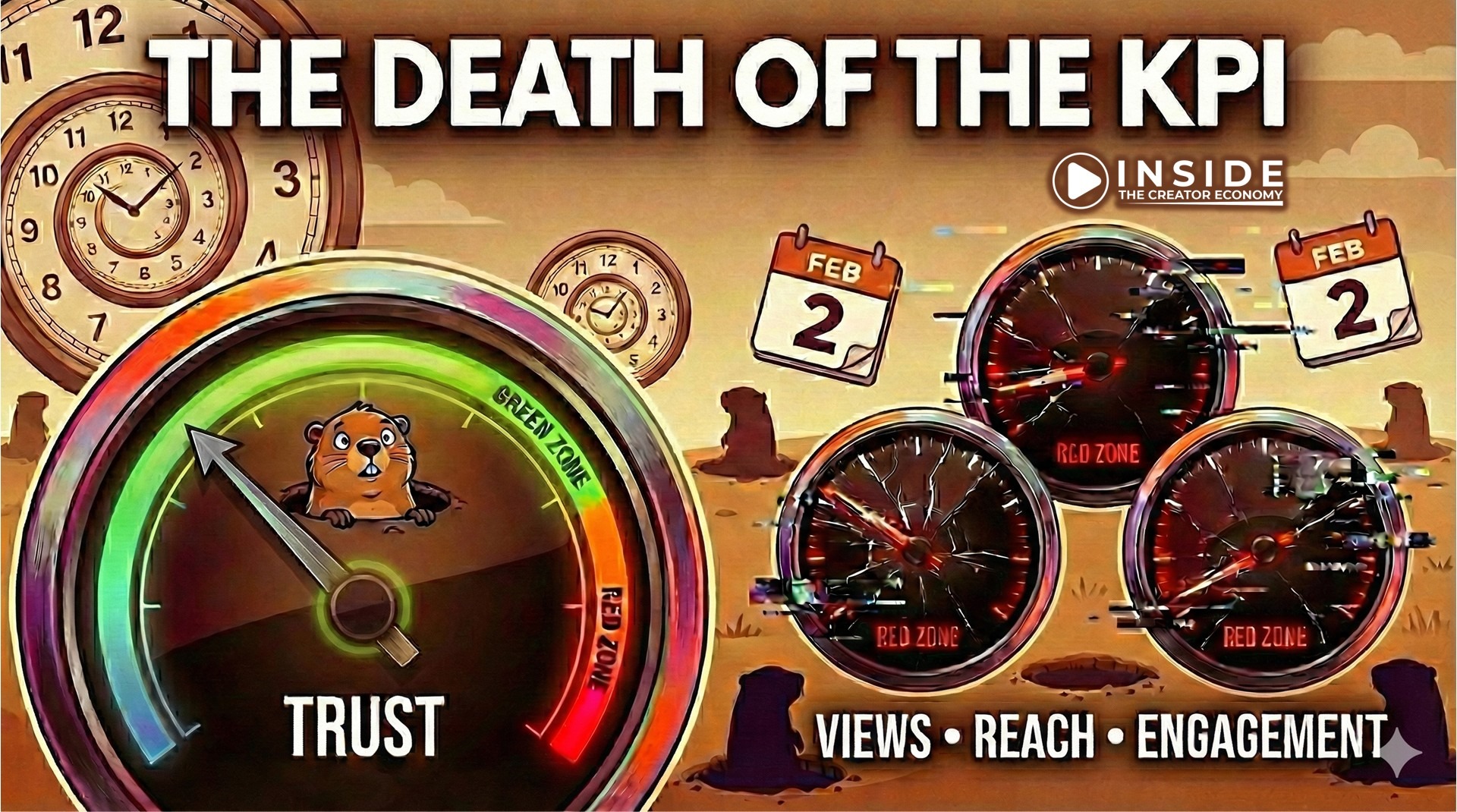
This Week: Why the “Trust Graph” is set to eclipse the Social Graph in 2026; TikTok USDS hits a wall of technical failures and privacy concerns; and why the “Clawdbot” drama is a reminder that the road to local AI remains incredibly bumpy.
Hi, I’m Jim Louderback. Welcome to this week’s ITCE, bitsy newsletter! If you’ve received it, then you are either subscribed or someone forwarded it to you.
If the latter – and you want to subscribe, get it here!
TOP STORIES
Trust As the Next Big Metric

Last week I highlighted @Patrick Shea-Stamford’s study on how CEOs are using LinkedIn. While the data fixated on reach and engagement, the underlying theme was trust… a word mentioned 13 times.
In many ways, trust is a flashback to the past. When I ran the test lab at PC Week, trust was all we had. We built it through independence and expertise, then almost lost it overnight when a star columnist publicly accused our editor in chief of bias in a spectacular, baseless resignation. It took years to recover. It was my raw introduction to the power and fragility of earned trust.
Trust will emerge as the defining metric of 2026. This multidimensional “trust graph” will soon matter more than Meta’s social graph, YouTube’s creator graph, or TikTok’s interest graph. We don’t yet have a universal way to quantify it, but that gap won’t last long.
Who else is long on trust? @Jeremy Boissinot has positioned Favikon around authenticity and credibility. @Abby Ho called it “The Trust Economy” back in October. And @Natalie Barbu recently noted that the next decade’s strongest companies will start with trust, not ads. It was also a dominant theme at @1 billion followers last month.
What comes next? Trust creates an opportunity for authenticity and reputation-forward social networks. AI startups are already leaning in, pitching context graphs as the next evolution beyond RAG for augmenting LLMs. (Fellow Kids, The Growth List, Ashu Garg, Favikon)
TIKTOK TURMOIL
Within days of TikTok USDS going live, the platform hit some major turbulence. A weather-related power outage triggered what TikTok called a “cascading systems failure,” leaving the app in shambles:
- New posts were stuck at 0 views.
- Creator earnings went missing and feeds glitched.
- CapCut features failed
- Advertisers saw significant campaign under-delivery.
The technical bugs were only half the problem. Users rebelled against a privacy-policy update expanding the collection of precise location data and off-platform targeting. Most concerning was language regarding “citizenship or immigration status,” which spooked users already wary of government overreach. Despite lawyers downplaying it as standard procedure, the timing was disastrous. An ownership change was supposed to calm the waters; instead, the optics were terrible.
The math on US ownership is also facing fresh scrutiny. Following our lead from last month, many are wondering: if the Abu Dhabi MGX fund’s 15% stake isn’t “US-owned,” where is the other 20% needed for US investors to hold a majority? (Oracle and Silver Lake currently hold 15% each).
By midweek, the backlash grew: mass user exits, creators furious about lost reach and revenue, and fresh suspicion that politics could seep into the algorithm. TikTok and Oracle deny the censorship claims, but shattered trust doesn’t wait for cringey apologies.
Some of this can be attributed to “opening night” jitters. But even if the tech stabilizes, the perception problem remains. Privacy optics plus political suspicion creates a toxic brew, and if it bubbles over, brands will not be far behind. YouTube and Meta seem to be following the Napoleon code: never interrupt your enemy while he’s making a mistake. (THR)
Related: TikTok’s official announcement says the USDS JV also covers CapCut, Lemon8, and “a portfolio of other apps and websites” in the U.S. But what about PineDrama, Bytedance’s new microdrama app? Still too many questions for me to be confident in the JV’s ultimate success. (TikTok)
Clawdbot Drama
I love the concept of an agent/LLM running locally. The recently renamed Clawdbot (now OpenClaw) has become a darling of the SF Technorati, but a darker side emerged last week. After a trademark injunction from Anthropic, they changed their name twice and were briefly besmirched by a flash-mob crypto rug-pull.
Another reminder that the road to the future is often bumpy and full of wrong turns. But don’t let the noise dissuade you from exploration. I fully expect a HankBot (or even a Khabybot) to show up soon. (CNet, Yahoo)
Related: Speaking of Khaby, regular readers know we explored the ups and downs of Lame’s reverse merger two weeks ago. Big media only caught on late last week. (BIoomberg, ITCE)
Related: And the agents are all chatting together on Moltbook. What could possibly go wrong? (Simon Willison’s Weblog)
Related: This is why we can’t have nice things… A flood of malicious skills are now targeting OpenClaw. (Tom’s Hardware)
SPONSOR
LinkedIn’s new B2B Buyer Report makes the case better than I ever could: buyers trust expert voices more than brands, and they spend most of their research time reading the people who actually understand the space. That’s exactly my audience: marketers, media execs, founders, top creators and operators who shape budgets and make decisions.
A weekly sponsorship puts your company inside a trusted, high-intent environment, shows up repeatedly where it actually matters, and aligns your brand with the point-of-view content buyers say moves them. If you want to speak to the people building the next wave of media, creators, and AI, this is where they show up every week.
Drop me an email and check out our sponsorship information here.
RESEARCH
NO EVIDENCE OF SOCIAL HARM: A broad study of UK teens fails to find a significant link between gaming/social use and mental health. But like many studies of the topic, it has limitations, particularly around time between check-ins and definition of “screen time”. (Guardian, Oxford)
LIVE SELLING GROWS UP FAST: Whatnot’s new “State of Live Selling” report details how, in western markets, live shopping has crossed the line from novelty to habit. The report estimates a $22B live shopping market across North America and Europe and says more than half of live sellers now generate most of their annual revenue through live commerce.
The most useful takeaway? Like other media, frequently and consistency matter. Sellers who go live daily earn way more than monthly and even weekly sellers (although weekly works). Live selling has also moved beyond collectibles into beauty and fashion, which brings in the big bucks. No surprise if you started reading at the top… trust matters here too.
BUT: This is a live selling report from a live-selling platform. But even if you heavily discount the numbers and the hype, the trend remains. Creators who focus on selling products that resonate with their community, and can do it at least weekly, are building real and sustainable businesses.
QUIBIS
PLATFORMS
Why AI Is Worthy: For all the slag over AI Slop, I like living in a world where YouTube videos like this can be made. (Greenland Defense Front) (HT @Susan McDermid, via @Brad Berens)
We’ve Seen This Before: During his q4 investor call, Meta CEO Mark Zuckerberg says everyone will have smart glasses in a few years (but not, apparently, VR headsets), and expects Meta to spend nearly $170B on infrastructure, AI and device development. AI will continue to infuse the algorithm and make it easier for advertisers to target you. (The Guardian)
Flood the Zone: @Mike Shields recaps some of the challenges facing Meta’s new Partnership Ad push. If you’re an AI-centric creator, flooding the zone with variations, this just might work. For everyone else? The jury is out. (Next in Media)
See You In Court: Meta/YouTube teen addiction suit goes to trial, emails might be a smoking gun. (Ars Technica)
Serendipity As A Service: Spotify explains how they optimize for Podcast discovery (Spotify)
Bytedance Wins: The TikTok parent company is now the world’s largest AI company. (X)
OTHER CREATOR ECONOMY
The Sincerest Form of Flattery: @Phil Ranta says the secret to success is to be a fast follower (Grow 1%)
Beware the Shopify Tax: Creators who sell products via Shopify will find their products will be priced 4% higher if purchased via ChatGPT checkout. Perhaps a tempest in a teapot, but Creators should brush up on AI SEO, along with focusing on sales-mix changes. (Pmnts)
Ouroboros: Paramount plans to launch short-form video – aka clips of its IP – and UGC. Too bad they fired all their in-house creator economy experts and divested VidCon over the past year or two. (BI)
Savior or Sink? LA ponders whether to create a $5M fund to subsidize microdrama production. Do they really think they can compete with Zhengzhou, Kiev, Mexico City and Bangkok? (Variety)
Dhar Can Do It: Fox Studios and Holywater team up with Dhar Mann Studios to create 40 microdramas. Optimistic but still unsure it’ll play in Peoria. (Variety)
The Great Sloptening: AI is creating a binomially distributed ad landscape, where big brands lean into high quality, and performance marketers like Temu and Shein flood the zone with many thousands of AI generated crapads (WPN)
CREATOR TECH – AI, AR, VR, MORE
Show Me Da Money: AI Funding report from HumanX and Crunchbase shows that San Francisco dominates… Excited to speak at HumanX in April in SF! (HumanX)
Additive Not Zero Sum: Good look at where SEO, AI and search engines stand at the beginning of the year. (Lily Ray – HT @Benedict Evans)
Related: The AI Attention Stack is taking shape. (BCG)
Where’s Jim? Somewhere over Michigan, trying to publish this newsletter on United’s lame WiFi. Starlink should be required on all planes!
I was on Nantucket all weekend and boy was it cold. And beautiful!


Like this free newsletter? Buy me a coffee and say thanks! Or let’s do a meetup in your town.
100% written by me. AI used very sparingly for edits.
I’ve built and sold multiple creator economy startups to top media companies – including an MCN to Discovery and VidCon to Paramount. Subscribe here on LinkedIn to get this newsletter every Monday.
Let me know what you think – email me at jim@louderback.com. Thanks for reading and see you around the internet.


